

Fast answer
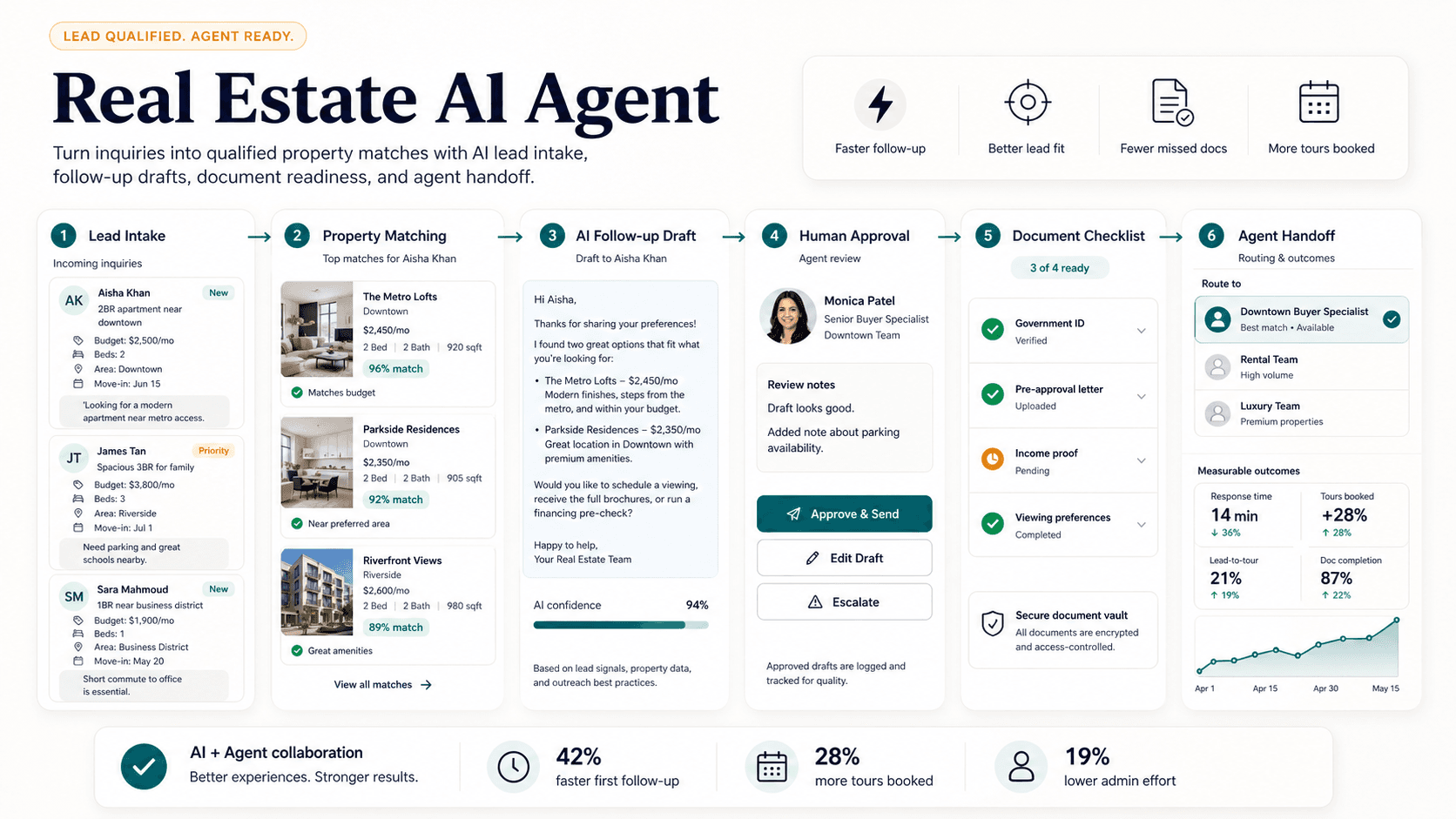
A real estate AI agent qualifies leads, drafts listing responses, researches neighborhoods, prepares showing notes, and prioritizes follow-ups. It should support licensed professionals, not give unsupervised legal or financial advice, so a licensed agent handles advice and final judgment while the agent collects facts and prioritizes follow-up. Start by mapping lead intake to capture buyer or seller goals, budget, timeline, location, financing status, property preferences, and urgency. Connect approved listing descriptions, MLS-safe notes, neighborhood research, showing details, and brokerage policy. Score follow-ups by readiness, responsiveness, timeline, fit, and missing information the agent should request. Draft friendly replies, showing prep, neighborhood summaries, and seller next steps while avoiding protected-class or legal advice issues, then sync preferences, next actions, objections, and history to the CRM. A safe first workflow is lead intake summaries, showing prep notes, and draft follow-up emails. Avoid stale listing data and generic follow-ups that sound automated.
On this page
What this page covers
A use-case visitor should understand the workflow, the source data required, where humans review, and what a safe first version looks like.
- 01Lead intake
- 02CRM sync
- 03Listing data
- 04Compliance notes
- 05Prompt examples
- 06Next course
Why does this matter now?
Real estate work depends on speed, local context, disciplined follow-up, and staying compliant with fair housing and licensing rules. Leads go cold fast, so the agent who responds first and with the right details often wins the client. A real estate agent that qualifies inquiries, drafts responses, and prioritizes follow-up lets a licensed agent react in minutes instead of hours without losing the personal judgment that closes deals. The guardrails matter as much as the speed, because a careless automated reply on advice or protected topics creates real legal exposure.
Internal path
Where to go next from this page
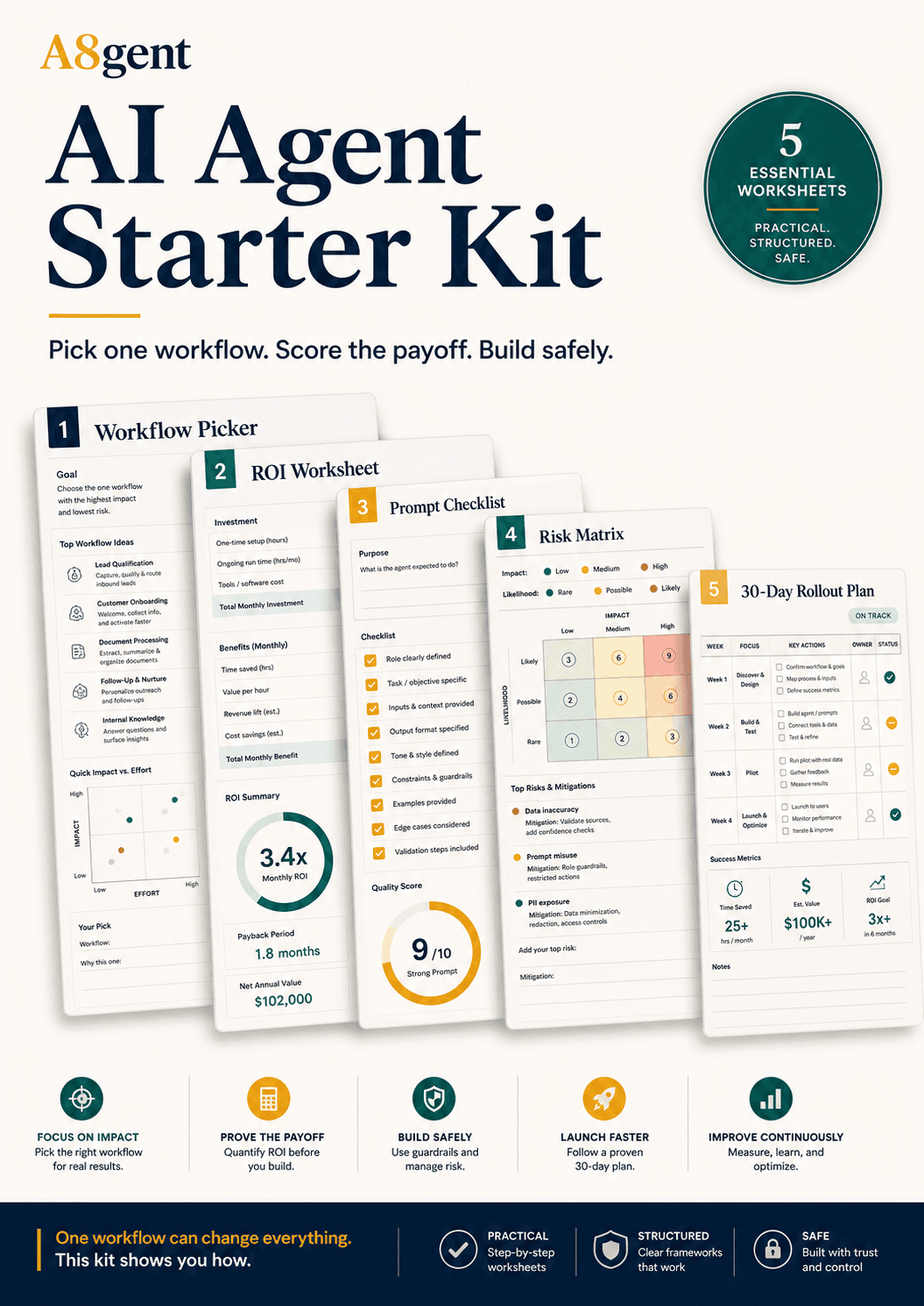
These links are part of the A8gent learning and conversion path. Use them to move from concept, to diagnosis, to workflow build, to course.
What you should be able to do after this
- Qualify buyer leads
- Draft listing responses
- Research neighborhoods
- Prioritize follow-ups
How do you do it, step by step?
1. Map lead intake
Capture buyer or seller goals, budget, timeline, location, financing status, property preferences, and urgency in a structured form. Ask the questions a licensed agent would ask on a first call so the summary is genuinely useful. Flag missing must-have fields so the agent knows what to request before handing off.
2. Connect listing context
Feed the agent approved listing descriptions, MLS-safe notes, neighborhood research, showing details, and brokerage policy. Keep the listing data fresh so it never quotes a price or status that has changed. Restrict it to approved sources so it does not pull figures or claims the brokerage has not cleared.
3. Score and prioritize follow-ups
Rank leads by readiness, responsiveness, timeline, fit, and the information still missing. Surface the hottest leads first so the agent spends time where it converts. Have the agent note what to ask each lead next so no follow-up starts from scratch.
4. Draft compliant responses
Prepare friendly replies, showing prep, neighborhood summaries, and seller next steps while steering clear of protected-class language, legal opinions, financing advice, and valuations. Give the agent explicit forbidden topics that must route to the licensed agent. Keep a human on the approve step for anything that could be read as advice.
5. Handle scheduling and reminders
Let the agent offer showing times from the calendar, send confirmations, and nudge leads who go quiet. Keep buffer time between showings and flag conflicts for the agent to resolve. Track no-shows so the follow-up cadence can adapt.
6. Sync the CRM
Log preferences, next actions, objections, and full communication history so follow-up stays personal and nothing repeats. Capture which leads converted so scoring improves over time. Keep the record clean enough that any agent covering the lead has full context.
7. Review and tune weekly
Sample recent drafts and follow-ups, correct anything that drifted toward advice or sounded generic, and reinforce what booked showings. Watch response time and showing-to-offer conversion rather than raw message counts. Update forbidden topics and scoring as the market and rules shift.
What mistakes should you avoid?
- Letting the agent make fair housing, legal, financing, or valuation claims without a licensed review.
- Using stale listing data that misstates price, status, or availability.
- Ignoring brokerage approval rules for what can be sent to a lead.
- Sending generic follow-ups that sound automated and erode trust.
- Failing to route protected-topic or advice questions to the licensed agent.
- Neglecting to log context in the CRM, so follow-ups repeat and leads feel unknown.
FAQ
Can an AI agent qualify real estate leads?
Yes, it can collect facts, score readiness, and prioritize follow-up, but a licensed professional should handle advice and final judgment. The agent gathers and organizes; the human decides.
What is a safe first workflow?
Lead intake summaries, showing prep notes, and draft follow-up emails are practical starting points. They save time without letting the agent say anything that requires a license.
How do we stay compliant with fair housing rules?
Give the agent an explicit list of forbidden topics, keep a human on the approve step for anything resembling advice, and restrict it to brokerage-approved language. Route protected-class or legal questions straight to the licensed agent.
Will responses sound robotic to clients?
Not if you supply the agent with real listing detail and your own follow-up style. Keeping a human reviewing the higher-stakes messages also preserves the personal tone that wins clients.
How much time does setup take?
Building the intake questions and connecting clean listing data is the main work and takes a couple of weeks. After that the agent runs continuously with light weekly tuning.
Which A8gent resources fit this page?
Link to the no-code AI agent course, the readiness quiz, and the customer onboarding AI agent for ideas on handing a new client off smoothly.
Sources & further reading
Done for you
Want a real estate agent built for your business?
Tell us the workflow. We scope, build, and ship the agent with guardrails and the numbers to prove it worked. The scoping call is free.
Free scoping call. You own the code.
Was this page helpful?