

Fast answer
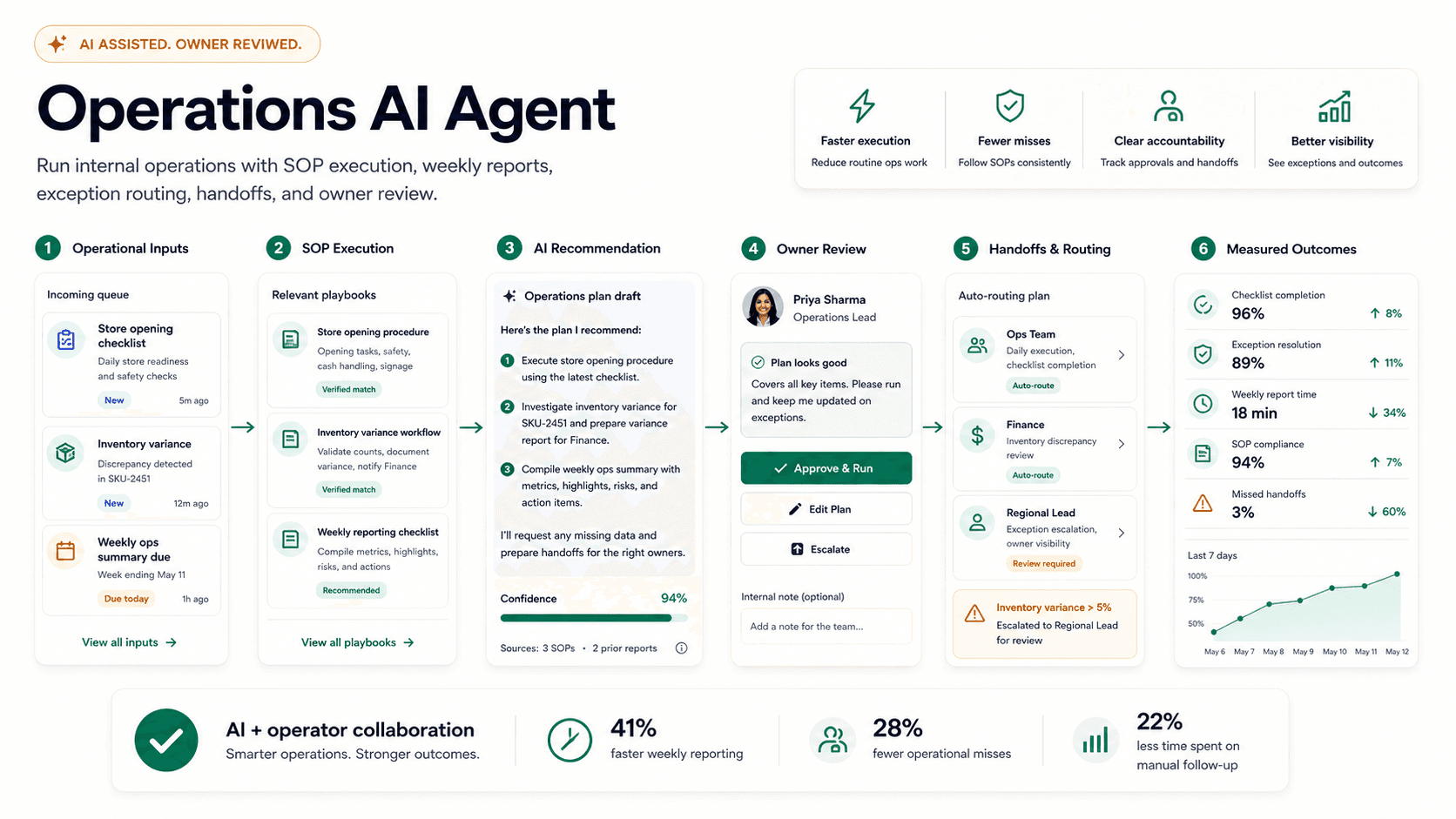
An operations AI agent summarizes meetings, chases missing inputs, updates trackers, prepares status notes, and flags blocked work. It is most useful when it reinforces an existing operating rhythm and acts as a coordinator rather than the owner of decisions. The best first workflow is a recurring status update or meeting follow-up, which is safer than trying to manage every project automatically. Start with a weekly meeting, project review, client update, or status report that already has clear owners. List where truth lives, whether Slack, email, docs, project boards, CRM, spreadsheets, calendar notes, or ticketing tools. Tell the agent what to summarize, what to ignore, when to request missing context, and how to format blockers, while requiring humans to approve customer-facing or executive-facing messages. Review exceptions weekly, tracking wrong summaries, missed blockers, duplicate reminders, and unclear owners. Founder-led teams, agencies, implementation teams, and service businesses with many repeated handoffs see value quickly.
On this page
What this page covers
A use-case visitor should understand the workflow, the source data required, where humans review, and what a safe first version looks like.
- 01Operating rhythm
- 02Integrations
- 03Approval rules
- 04Dashboards
- 05Failure modes
- 06Rollout plan
Why does this matter now?
Operations work usually fails through coordination drag rather than lack of effort, as updates go stale, blockers hide, and the same status questions get asked every week. An operations agent reinforces an existing rhythm by gathering scattered inputs, summarizing what changed, chasing missing pieces, and surfacing what is blocked. That removes recurring admin from founders, managers, and project leads without handing decisions to software. The value is highest where handoffs repeat, because a small amount of consistent coordination compounds across every project the team runs.
Internal path
Where to go next from this page
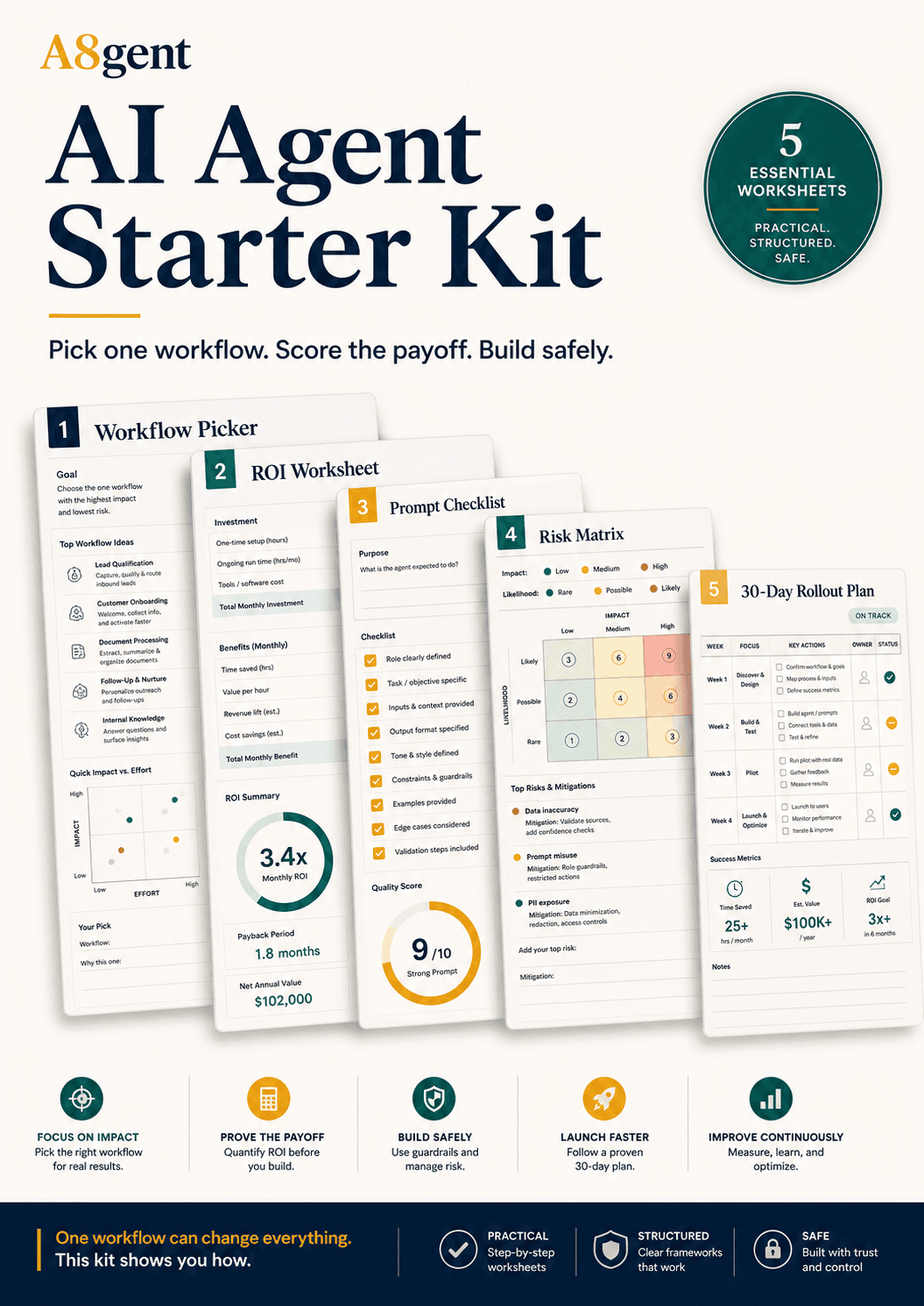
These links are part of the A8gent learning and conversion path. Use them to move from concept, to diagnosis, to workflow build, to course.
What you should be able to do after this
- Automate recurring status work
- Summarize decisions
- Route follow-ups
- Reduce coordination drag
How do you do it, step by step?
1. Choose the operating rhythm
Start with one recurring event that already has clear owners, such as a weekly project review, a client update, or a Monday status report. Automating an existing rhythm is far safer than trying to run every project at once. Pick something painful enough that the team will notice the relief but contained enough to get right.
2. Define source systems
List exactly where truth lives, whether Slack channels, email, docs, project boards, the CRM, spreadsheets, calendar notes, or ticketing tools. Give the agent read access to those and nothing extra, so it works from real signals rather than guesses. Note which system is authoritative when two disagree so summaries stay consistent.
3. Create update rules
Tell the agent what to summarize, what to ignore, when to request missing context, and how to format blockers and owners. Be explicit that unclear or missing status should trigger a question to the owner, not a fabricated update. Define a fixed structure so every status reads the same way and is easy to scan.
4. Chase missing inputs
Have the agent detect items with no recent update, no owner, or no due date and nudge the responsible person before the meeting rather than after. Route the nudge to the individual with the specific item, not a broad channel blast. This is where a coordinator agent earns its keep, because it closes gaps quietly ahead of time.
5. Keep approvals explicit
Let the agent draft updates, reminders, and status notes, but require a human to approve anything customer-facing or executive-facing before it sends. Internal, low-stakes reminders can go out automatically once the format is trusted. Keep the agent framed as the coordinator while people remain the owners of decisions.
6. Prepare the status artifact
Assemble the summary, the decisions needed, the blockers, and the open questions into a single scannable note the owner can review in a couple of minutes. Highlight what changed since last time so no one rereads the whole thing. Attach links back to the source so anyone can verify a line quickly.
7. Review exceptions weekly
Track wrong summaries, missed blockers, duplicate reminders, and unclear owners, and fix the rule or the source that caused each one. Retire nudges that annoy people and reinforce the ones that actually move work. As accuracy holds, expand the agent to a second rhythm rather than everything at once.
What mistakes should you avoid?
- Automating a messy process before owners, due dates, and definitions of done are clear.
- Sending reminders without context, priority, or the specific item they refer to.
- Updating dashboards or status notes from unverified or stale inputs.
- Treating the agent as the owner of decisions instead of the coordinator of information.
- Blasting nudges to whole channels instead of the individual responsible for the item.
- Expanding to every project at once before a single rhythm is reliable.
FAQ
What is the best first operations workflow?
A recurring status update or meeting follow-up workflow is usually safer than trying to manage every project automatically. It is contained, easy to measure, and immediately useful, which builds trust for wider rollout.
Which teams benefit first?
Founder-led teams, agencies, implementation teams, and service businesses with many repeated handoffs see value quickly. The more the same coordination happens each week, the faster the agent pays off.
Does the agent make decisions?
No. It gathers inputs, summarizes, chases missing pieces, and surfaces blockers, but people decide and approve. Framing it as a coordinator keeps accountability where it belongs.
How do we stop it from annoying the team with reminders?
Target nudges to the specific owner and item, cap frequency, and review which reminders actually help each week. Retire the noisy ones quickly so the useful ones keep their signal.
How long before it is reliable?
For one rhythm with clean sources, a few weeks of tuning usually gets summaries and nudges trustworthy. Messy sources or unclear ownership extend that, which is why cleanup comes first.
What should this connect to?
Use the AI automation workflow planner for scoping and the meeting follow-up AI agent for turning calls into action items that feed the operating rhythm.
Sources & further reading
Done for you
Want a operations agent built for your business?
Tell us the workflow. We scope, build, and ship the agent with guardrails and the numbers to prove it worked. The scoping call is free.
Free scoping call. You own the code.
Was this page helpful?