
How to use it
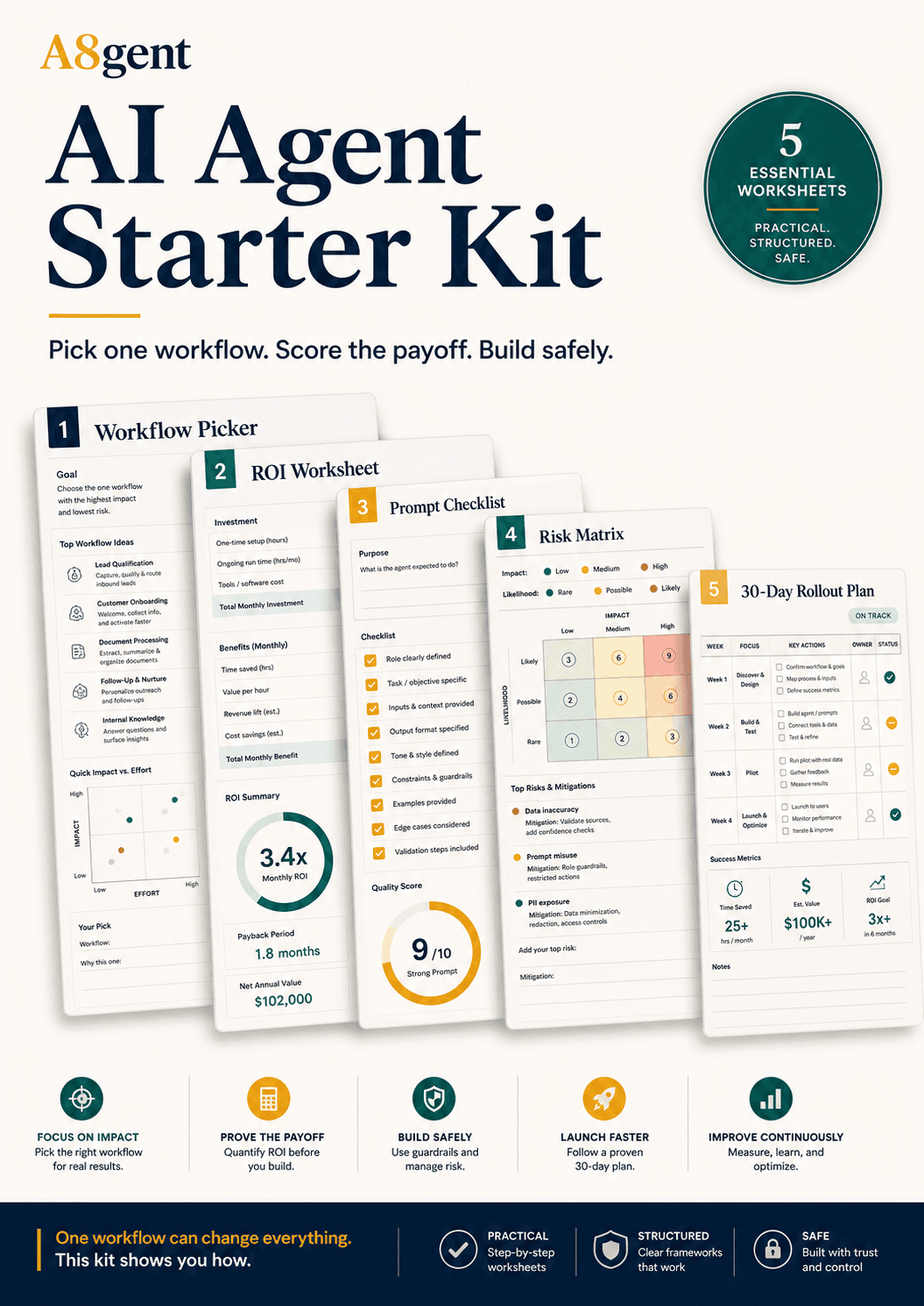
Ship this template in three steps
It is built to be forked. Copy it, make it yours, and put it to work on a real task the same day.
- 01
Copy the structure
Drop the template into your own doc or workspace. Every section is laid out and ready to fill.
- 02
Fill in your context
Swap the placeholders for your real workflow, trusted data sources, and review rules.
- 03
Ship and iterate
Run it on one real task with a human in the loop, then expand the parts that work.
Get the full template
Free and copy-paste ready. Preview it before you download.
Fast answer
A team AI agent training plan is a structured program for teaching employees to use agents in their real work, and you need one whenever you want consistent business use across a team rather than one-off prompt experiments. It gives the team a shared operating model so people neither avoid the tools nor use them in inconsistent ways that create quality and compliance risk. The plan defines role-based outcomes for support, sales, operations, marketing, HR, and leadership, with each role practicing workflows it actually owns. Build a two-week exercise plan of safe real-world tasks, examples, and review checklists, and give people time to improve prompts and steps. Document data and approval rules covering what information can be used, what must stay out of tools, and which outputs need human review. Measure adoption with workflow metrics like completed workflows, accepted outputs, time saved, quality issues, and template improvements, and include manager coaching throughout rather than treating training as a single event.
On this page
What this page covers
A template visitor should know what to fill in, when to use it, and which tool or course turns it into a working workflow.
- 01Training goals
- 02Role tracks
- 03Practice tasks
- 04Policy
- 05Coaching
- 06Scorecard
Why does this matter now?
Teams need a shared operating model for agents. Without training, employees either avoid the tools or use them in inconsistent ways that create quality and compliance risk. A plan turns scattered individual experiments into repeatable workflows the whole team can trust and review. It also gives managers a way to coach and measure progress instead of hoping adoption happens on its own.
Internal path
Where to go next from this page
These links are part of the A8gent learning and conversion path. Use them to move from concept, to diagnosis, to workflow build, to course.
What you should be able to do after this
- Plan workshops
- Assign role exercises
- Set usage standards
- Measure adoption
How do you do it, step by step?
1. Define role-based outcomes
Set separate outcomes for support, sales, operations, marketing, HR, and leadership. Each role should practice workflows it actually owns, not generic prompt tricks. Write the outcome as a task the person already does, so the training connects to real work from day one.
2. Pick starter workflows per role
For each role, choose one or two low-risk workflows to learn first, such as drafting support replies or summarizing meeting notes. Starting narrow builds confidence and gives you clean examples to reuse. Save higher-risk workflows for after the basics are solid.
3. Create a two-week exercise plan
Give employees safe real-world tasks, examples, review checklists, and time to improve prompts or workflow steps. Space the exercises so people practice, get feedback, and try again rather than watching one long demo. End each week with a short review of what worked and what to change.
4. Add data and approval rules
Document what information can be used, what must stay out of tools, and which outputs need human review. Make these rules specific to each role, since a support rep and an HR coordinator handle different sensitive data. Put the rules where people work so they are read, not filed away.
5. Build a shared example library
As people find prompts and workflows that work, capture them in one place the whole team can reach. Include the input, the output, and a note on when to use it. This library is what turns one person's good result into a team standard.
6. Add manager coaching
Give managers a simple routine for reviewing outputs, spotting weak prompts, and praising good reuse. Coaching is what keeps adoption going after the initial excitement fades. Managers who cannot use the tools themselves cannot coach, so train them first.
7. Measure adoption with workflow metrics
Track completed workflows, accepted outputs, time saved, quality issues, and template improvements instead of tool enthusiasm. Compare against how the work was done before so the numbers mean something. Use the metrics to decide which workflows to expand and which to rework.
8. Run a follow-up cycle
After the first two weeks, schedule a recurring review to add new workflows, retire ones that did not help, and update the rules. Treating training as ongoing keeps the team improving as tools and tasks change. This is where a one-time class becomes a real operating model.
What mistakes should you avoid?
- Using the same generic exercise for every role
- Starting people on high-risk workflows before the basics are solid
- Skipping manager coaching after the kickoff session
- Failing to capture examples that employees can reuse
- Measuring tool enthusiasm instead of completed workflows
- Treating training as a single event with no follow-up
FAQ
What should be included in AI agent training?
Include workflow mapping, prompt and context design, tool boundaries, review standards, data policy, and role-specific practice. The emphasis should be on workflows people actually own, not general tool tours. Practical exercises with feedback matter more than lectures.
How do you know AI agent training worked?
Look for repeatable workflows adopted by the team, fewer manual steps, better output quality, and clear manager review habits. If people are reusing shared examples and completing workflows without hand-holding, the training took hold. If usage drops after the first week, the follow-up cycle is missing.
How long should a training plan run?
A focused two-week plan is enough to build first workflows, followed by a recurring review cycle. The initial period gets people practicing on real tasks, and the follow-up keeps them improving. Trying to teach everything at once usually overwhelms people and sticks less.
Should every role be trained the same way?
No. Support, sales, operations, marketing, and HR each own different workflows and handle different data, so their exercises and rules should differ. A shared foundation on prompting and review standards is useful, but the practice tasks must be role-specific to stick.
Who should run the training?
A workflow owner or enablement lead should run it, with managers involved in coaching. The person leading needs to understand both the tools and the team's real work. Bringing managers in early means the habits continue after the formal sessions end.
What if people resist using the tools?
Start with low-risk workflows that clearly save them time, and let early wins spread by example. Resistance usually comes from unclear rules or fear of making a mistake, both of which the plan's data policy and review standards address. Coaching and visible peer results move skeptics faster than mandates.
Sources & further reading
Was this page helpful?