

How to use it
Ship this template in three steps
It is built to be forked. Copy it, make it yours, and put it to work on a real task the same day.
- 01
Copy the structure
Drop the template into your own doc or workspace. Every section is laid out and ready to fill.
- 02
Fill in your context
Swap the placeholders for your real workflow, trusted data sources, and review rules.
- 03
Ship and iterate
Run it on one real task with a human in the loop, then expand the parts that work.
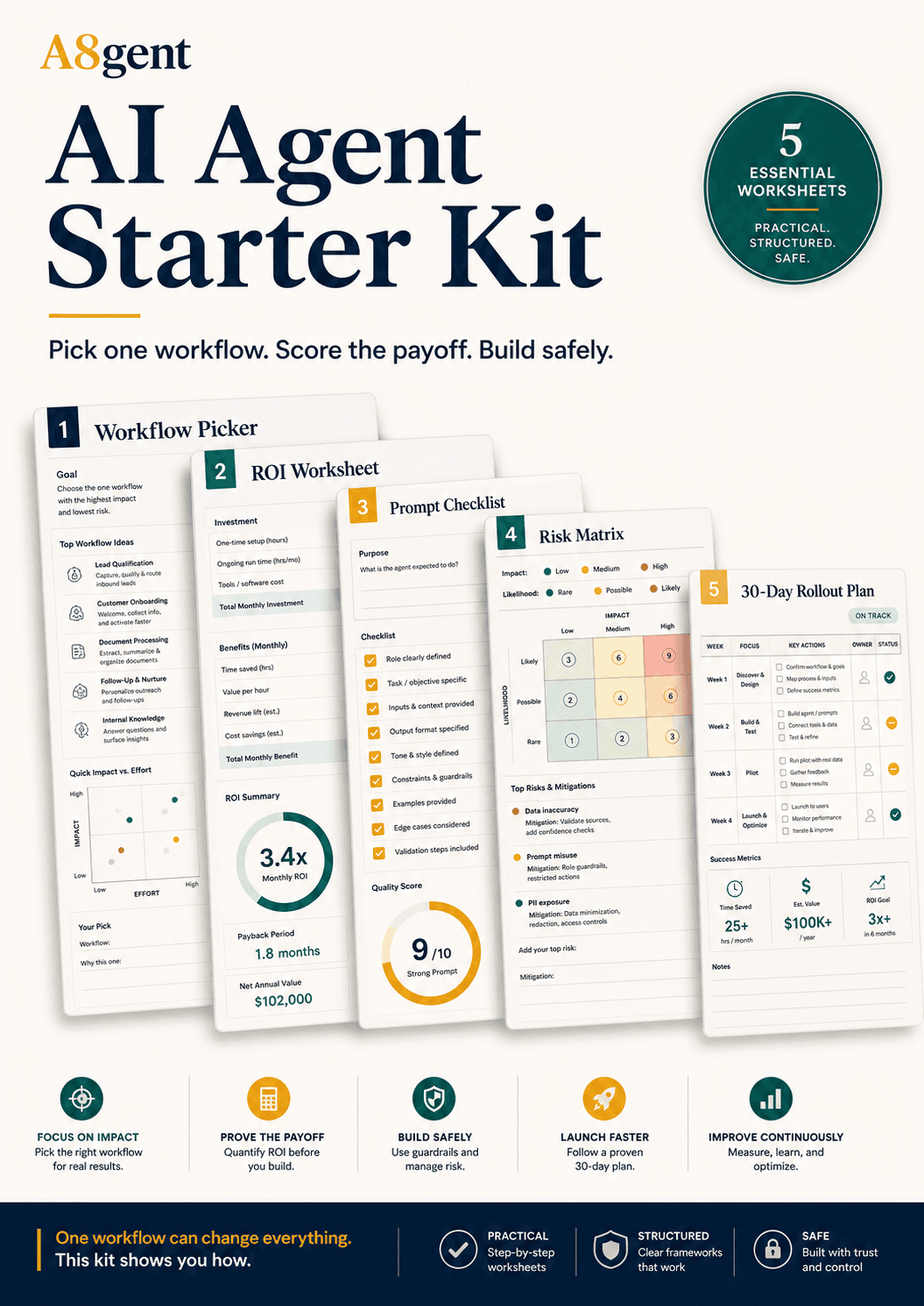
Get the full template
Free and copy-paste ready. Preview it before you download.
Fast answer
A client discovery call script for AI automation is a guided set of questions for a first sales conversation, and you use it whenever a client asks for AI without knowing which workflow is ready, which data source is trustworthy, or where humans still need to approve work. Good discovery prevents bad builds by uncovering repeated workflows, current tools, data quality, task volume, approval needs, risk level, budget, and decision criteria. Open with the bottleneck, asking what work is slow, repeated, expensive, error-prone, or dependent on one overloaded person. Audit tools and data by asking where the work happens now, what fields or documents exist, and which source is considered accurate. Find approval needs by asking what the agent should draft, recommend, update, send, or escalate, and who reviews each action. Qualify next steps by confirming urgency, owner, success metric, budget range, and whether a small pilot is acceptable. A first call can run 30 to 45 minutes.
On this page
What this page covers
A template visitor should know what to fill in, when to use it, and which tool or course turns it into a working workflow.
- 01Opening
- 02Workflow questions
- 03Tool stack
- 04Data readiness
- 05Risk questions
- 06Next steps
Why does this matter now?
Good discovery prevents bad builds. Many clients ask for AI without knowing which workflow is ready, which data source is trustworthy, or where humans still need to approve work. A structured call surfaces those unknowns before anyone commits to a scope or a price. It also positions you as an advisor who diagnoses before prescribing, which builds the trust that closes the deal.
Internal path
Where to go next from this page
These links are part of the A8gent learning and conversion path. Use them to move from concept, to diagnosis, to workflow build, to course.
What you should be able to do after this
- Ask better discovery questions
- Find profitable workflows
- Spot data gaps
- Qualify implementation fit
How do you do it, step by step?
1. Set the frame
Open by explaining that the call is to understand their workflows before recommending anything, so they should not expect a pitch. This lowers their guard and gets more honest answers. It also signals that you scope carefully rather than selling AI at everything.
2. Open with the bottleneck
Ask what work is slow, repeated, expensive, error-prone, or dependent on one overloaded person. Let them describe the pain in their own words before you narrow it. The best automation candidates are workflows that are frequent, rule-based, and painful today.
3. Understand the current process
Have them walk through how the workflow runs step by step right now, including who touches it and where it stalls. This reveals hidden handoffs and exceptions that a build must handle. You cannot automate a process you do not understand end to end.
4. Audit tools and data
Ask where the work happens now, what fields or documents exist, and which source is considered accurate. Probe how clean and current that data is, since the agent inherits every error in it. Messy or scattered data often means a cleanup step comes before any automation.
5. Find approval needs
Ask what the agent should draft, recommend, update, send, or escalate, and who needs to review each action. Pay attention to anything touching customers, money, or compliance, which usually stays behind human approval. Mapping this now shapes both the build and the risk conversation.
6. Surface risk and compliance concerns
Ask about regulated data, customer-facing communication, and any past incidents that make them cautious. Understanding their risk tolerance keeps you from proposing automation they cannot accept. Naming these concerns early shows you take accountability seriously.
7. Qualify the opportunity
Confirm urgency, owner, success metric, budget range, and whether a small pilot is acceptable. If there is no owner or no measurable outcome, the project is not ready regardless of enthusiasm. Qualifying here saves you from scoping work that will never get approved.
8. Agree on a pilot and next step
End by proposing one specific workflow to pilot and a concrete next action, such as a workflow audit or a scoped proposal. A named pilot turns a good conversation into a real opportunity. Leaving without a defined next step is how promising calls go cold.
What mistakes should you avoid?
- Starting with tool recommendations before understanding the workflow
- Skipping the walk-through of the current process
- Skipping data-quality questions and assuming the data is clean
- Ignoring compliance or customer-risk concerns
- Failing to qualify owner, metric, and budget
- Ending without a specific pilot workflow and next step
FAQ
What questions should I ask on an AI automation discovery call?
Ask about repeated tasks, volume, the current step-by-step process, tools, data sources, approval rules, risk, success metrics, and budget. The aim is to learn which workflow is ready and where humans must stay in the loop. Diagnose the workflow before recommending any tool.
How long should discovery take?
A first call can be 30 to 45 minutes, followed by a workflow audit if the opportunity is real. Keep the first call focused on understanding rather than solving. The deeper audit comes once both sides agree there is a workflow worth building.
How do I tell if a workflow is ready to automate?
Look for a process that is frequent, rule-based, and painful, with trustworthy data and a clear owner. If the data is messy or nobody owns the outcome, the workflow needs work before a build. Discovery exists to spot these gaps early.
What if the client just wants AI without a clear use case?
Guide them back to a specific bottleneck by asking what work is slow, repeated, or error-prone. Selling a narrow workflow with visible value is easier to deliver than open-ended AI. If no real workflow emerges, it is better to say so than to scope a vague project.
How do I handle data and compliance concerns on the call?
Ask directly about regulated data, customer communication, and past incidents, and note where human approval is required. Understanding their risk tolerance shapes what you can responsibly propose. Raising these topics yourself builds more trust than avoiding them.
How does discovery lead to a proposal?
Use the call to identify one pilot workflow, then turn the notes on scope, data, approvals, and metrics into a proposal. The clearer the discovery, the tighter and more convincing the proposal. Skipping discovery usually produces a vague proposal that is easy to reject.
Sources & further reading
Was this page helpful?